

Last updated: 11 August 2026 by the technicians at Max Appliance Repair Kitchener.
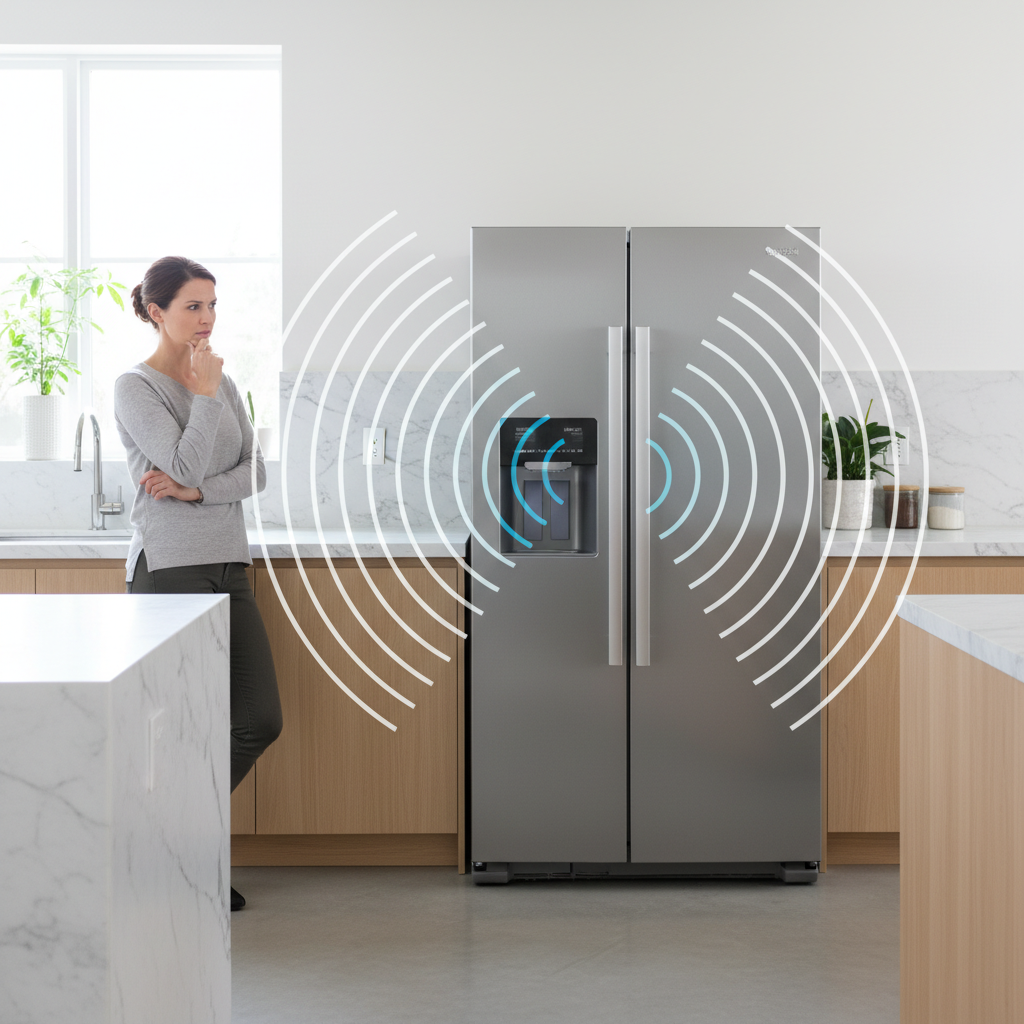
A fridge that suddenly starts making new noises is unsettling, mostly because you can’t tell if it’s about to fail or just doing something normal. The good news: most refrigerator noises have a clear cause, and plenty of them don’t require a repair call at all. This guide walks through the most common sounds Kitchener-Waterloo homeowners report, what each one usually means, and how to tell when the noise is a signal to call for fridge repair.
Normal fridge sounds you can ignore
Before you call anyone, it’s worth knowing what a healthy fridge actually sounds like. Most modern refrigerators cycle on and off dozens of times a day, and each part of that cycle has a sound signature.
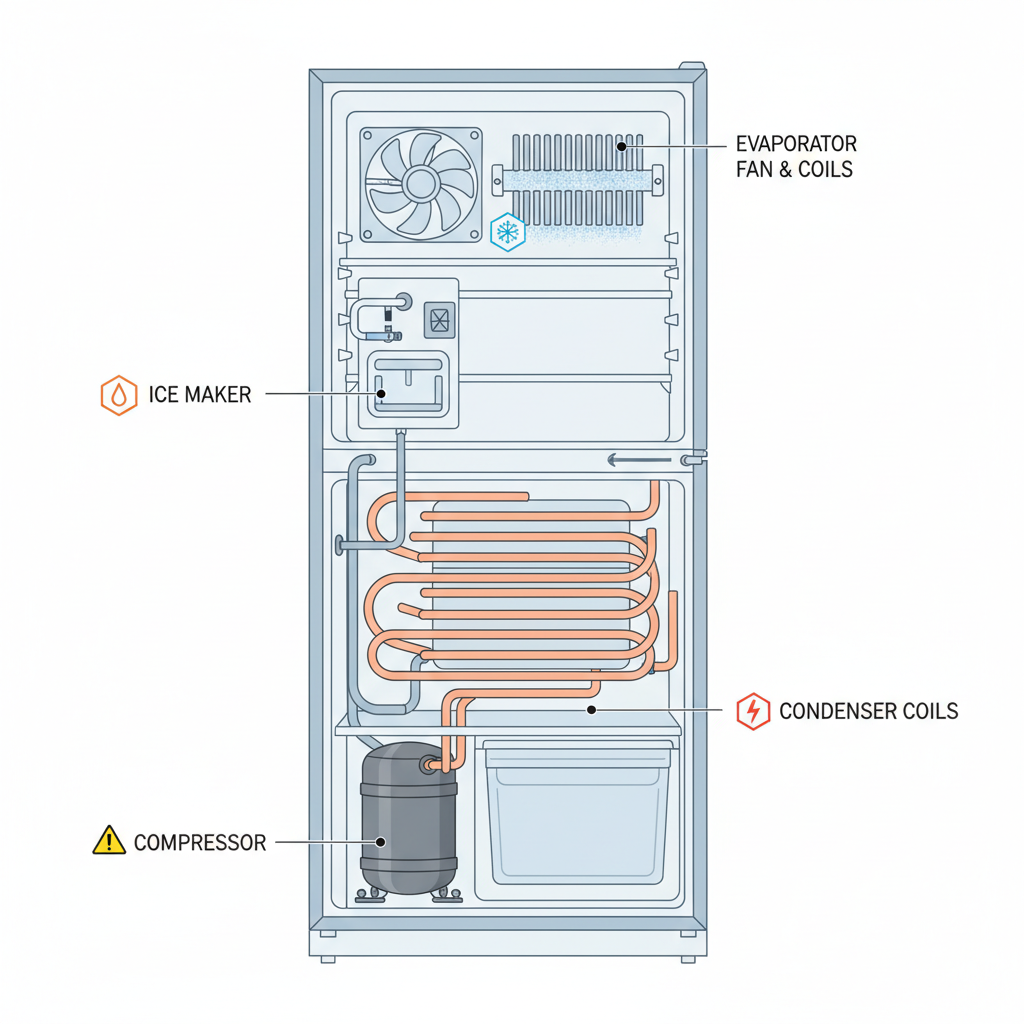
The compressor running is a low, steady hum. The evaporator fan moving air around the freezer compartment makes a lighter, airier sound. Water dripping onto the drain pan after a defrost cycle creates a brief gurgling or hissing. Ice falling into the bin in a built-in ice maker is a thunk. These are all normal. If you’ve had the fridge for years and these sounds haven’t changed, they’re not a problem.
Where it gets interesting is when you hear something new or something that has gotten noticeably louder over the last few weeks.
Clicking or popping sounds
A click when the compressor starts or stops is completely normal. The compressor cycles on and off based on temperature, and the startup click is the relay closing. What you don’t want to hear is rapid-fire clicking with no sustained hum following it.
Rapid clicking that doesn’t resolve into a running compressor is almost always a failing start relay. The relay’s job is to get the compressor motor up to speed. When it wears out, the compressor tries to start, fails, and tries again. You’ll hear three to five clicks in a short burst, silence, then the same pattern again.
Start relays cost $15 to $50 in parts and are a common DIY fix on Samsung, LG, and Whirlpool fridges. Pull the fridge from the wall, unplug it, find the relay on the side of the compressor, and shake it. If it rattles like a broken marble inside, it’s dead. If you’re not comfortable with that diagnosis, it’s a fast repair call.
Popping sounds when the fridge temperature changes are normal thermal expansion. The plastic walls of the cabinet expand and contract with temperature cycling. If it bothers you, check that the fridge isn’t sitting against a cabinet side with no airspace.
Buzzing or loud humming
The compressor is the most likely source of a humming noise. A fridge that suddenly runs louder than it used to, with a deeper or more strained hum, often means the compressor is working harder than normal. Common reasons include a dirty condenser coil (on the back or underneath the fridge) and a fridge that’s running in a warmer space than usual.
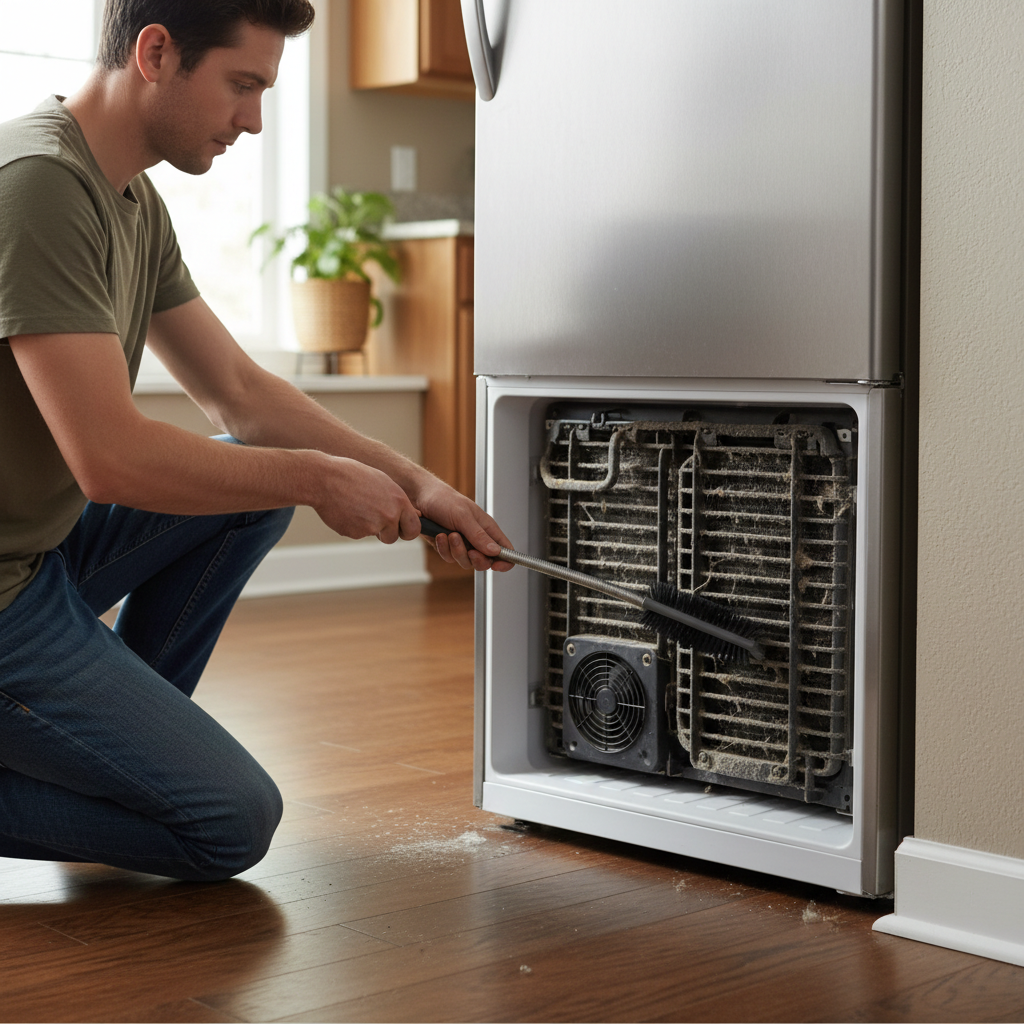
Condenser coils collect dust and pet hair over time, and dirty coils make the compressor work harder. Cleaning them, if your fridge has accessible coils, is a 10-minute job with a coil brush and a vacuum. Pull the fridge out, find the coils (usually at the back or under a panel at the bottom front), and brush them clean. Some homeowners in Kitchener-Waterloo skip this step for years without consequence, but it does add wear to the compressor over time.
A buzzing sound from the ice maker area usually means the water inlet valve is opening but the water supply is partially blocked or the water pressure is low. Low water pressure (under 20 psi) prevents the valve from filling the ice maker properly, and the motor buzzes as it tries to push water through. Check that the water line behind the fridge isn’t kinked.
Rattling and vibration
Rattling is often not the fridge at all. Check the obvious stuff first: bottles and containers on the shelves vibrating against each other, the drip pan underneath the fridge (it can rattle if it’s been knocked loose), and the fridge’s leveling feet. A fridge that isn’t level rocks slightly under compressor vibration, which creates a rattle or buzz on hard floors.
If the noise is definitely coming from inside the unit, two suspects stand out: the evaporator fan and the condenser fan. The evaporator fan is in the freezer compartment, and when its bearings start to wear, it produces a grinding rattle that gets louder when you open the freezer door. The condenser fan (near the compressor at the back) makes a more external-facing rattle.
Both fans are repairable. Fan motor replacement typically costs $150 to $280 in KW, parts included.
Gurgling, dripping, or hissing sounds
These sounds are almost always normal. Refrigerant circulating through the sealed system makes a gentle gurgle. The automatic defrost cycle heats the evaporator coils every 6 to 12 hours, which causes ice to melt and drip down to the drain pan. That dripping or hissing is the water hitting the warm drain pan.
The exception: a hissing that sounds more like a leak, that persists after the defrost cycle ends, or that comes with a chemical smell. Refrigerant leaks are uncommon but do happen on older units. If you smell something sweet or chemical near the fridge, shut it off and call a technician. Refrigerant handling in Canada requires a licensed technician under the Environmental Protection Act.
Grinding or squealing
Grinding is the one sound you should respond to quickly. If you hear a grinding or squealing coming from the freezer compartment, the evaporator fan is likely the culprit. Fan blades can pick up ice buildup and start grinding against it, especially in units where the defrost cycle is malfunctioning and ice is accumulating faster than normal.
Turn the fridge off, unplug it, and let it defrost for 24 hours with the freezer door open. If the noise stops and doesn’t come back after a day of running, the problem was ice buildup around the fan. If the noise comes back within a day or two, the defrost heater or defrost thermostat is failing, which means ice will keep accumulating until you get it repaired.
A squealing from the compressor area usually means the compressor itself is wearing out. Compressor noise that changes over time, or that comes with the fridge struggling to maintain temperature, is a repair call or a replacement decision. See our fridge repair service in Kitchener for help diagnosing this.
When to call a repair tech
Most fridge noises don’t require an urgent call. But there are specific situations where you should stop using the fridge and call the same day:
- Any chemical smell combined with a hissing sound (possible refrigerant leak)
- Grinding that continues after a 24-hour manual defrost
- Compressor clicking without any running interval (start relay failure means zero cooling)
- Any noise accompanied by the fridge not holding temperature
For anything else, the noise is diagnostic information rather than an emergency. Make note of when you hear it (on compressor startup, during defrost, all the time), and pass that information to the technician when you book. It cuts diagnostic time and often lowers the repair cost.
Frequently asked questions
Dirty condenser coils are the most common cause of a compressor running louder than normal. Pull the fridge out and clean the coils. If cleaning doesn’t help, the compressor or evaporator fan may be wearing out.
One or two clicks when the compressor starts or stops is normal. Rapid-fire clicking that doesn’t resolve into a running compressor usually means a failing start relay, which is a straightforward repair.
Gurgling is usually refrigerant moving through the system or water dripping during the defrost cycle. Both are normal. Persistent gurgling with a chemical smell is worth investigating.
It depends on the cause. A start relay costs $100 to $200 to replace. Fan motor replacement runs $150 to $280. Defrost heater or thermostat repairs typically fall in the $150 to $300 range.
Same-day service across Kitchener, Waterloo, Cambridge, and Guelph. Call or book online.
Book a repairNeed a technician in Waterloo Region?
A noise that keeps coming back usually means a fan or compressor is on its way out. Book fridge repair Kitchener or freezer repair. We also cover appliance repair Cambridge. Call (519) 783-0985, 7am to 10pm, seven days a week.
Worth knowing before you call
- Noise plus a warming compartment is more urgent than noise alone. Health Canada gives 4C or colder for the fridge and -18C (0F) for the freezer, so check the temperature first and treat anything above that as a food safety issue.
- A fridge that has started running constantly as well as making noise usually has dirty condenser coils or a failing fan. Both are cheap to fix early and expensive to ignore.