
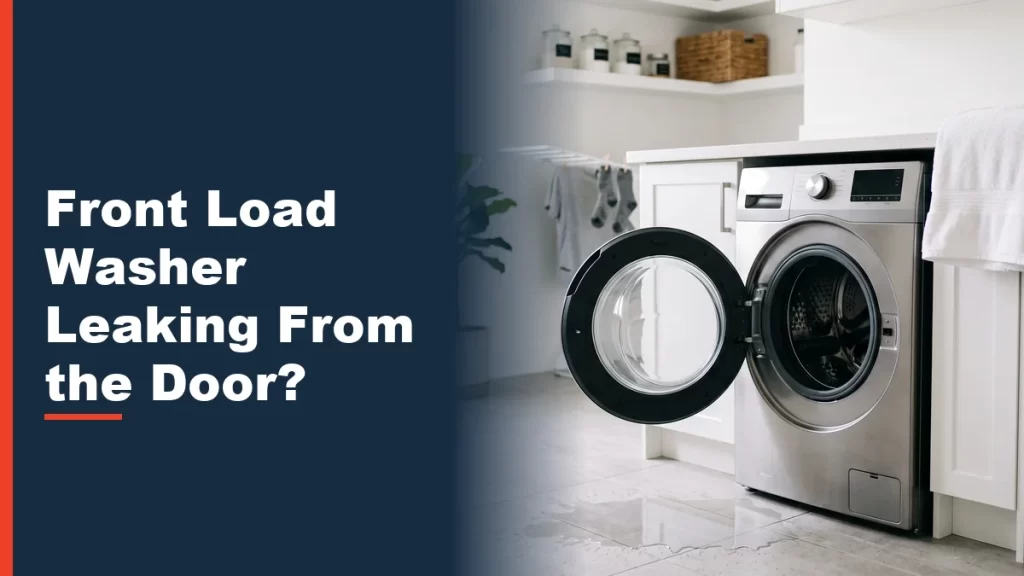
Can you fix a front load washer leaking from its door yourself, or does this problem require a technician? Good news: a front load washer leaking from the door is usually one of the easiest appliance issues to diagnose and fix. More often than not, a simple adjustment or quick cleaning will solve the issue before you need to schedule a service visit.
This guide walks through the troubleshooting steps to try first, when to schedule a professional repair, and what a door seal replacement involves for homeowners in Kitchener-Waterloo.
Why a Front Load Washer Leaks From the Door
Quick Answer: A front load washer leaks from the door due to trapped debris in the rubber gasket fold, excess suds from non-HE detergent, or a damaged door boot seal. Cleaning the gasket fold and adjusting detergent usage solves the majority of door leaks without requiring replacement parts.
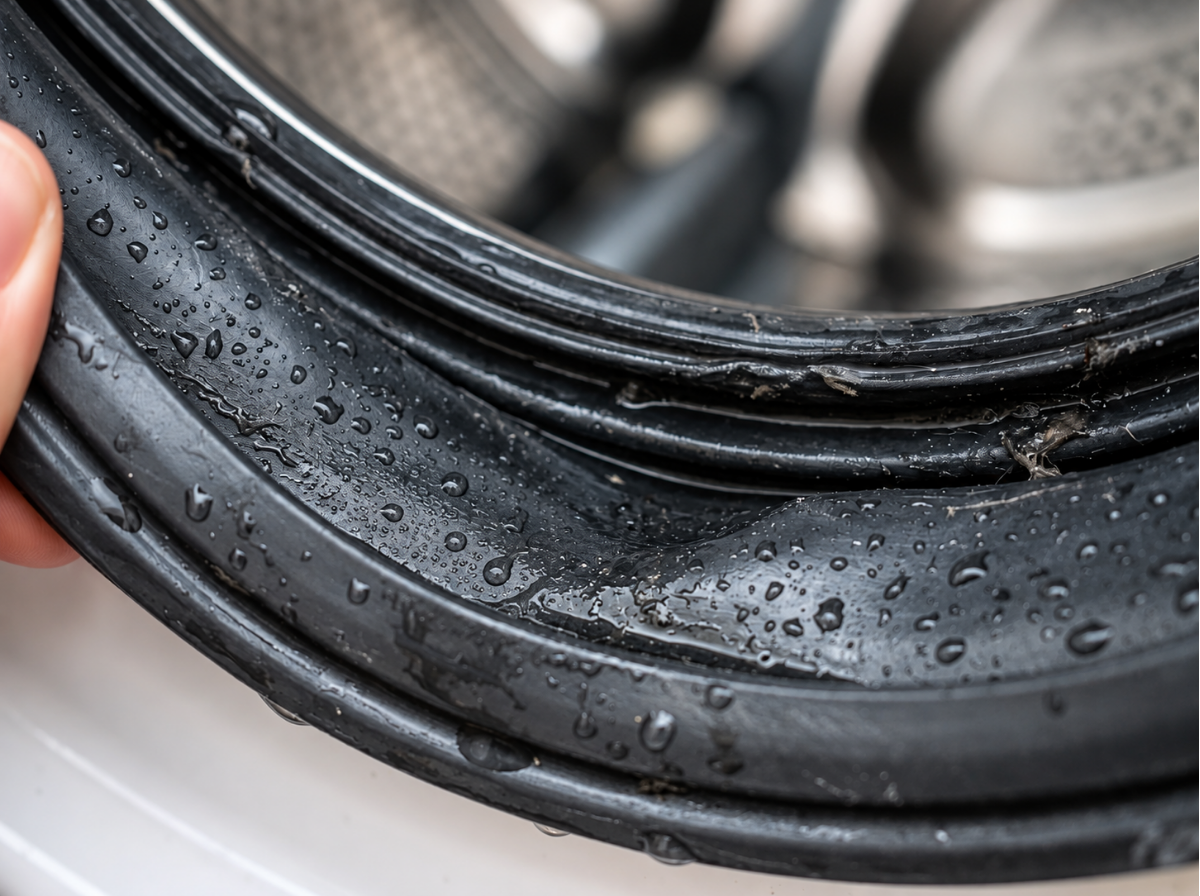
Every front load washer relies on a thick rubber gasket, often called a door boot seal, to contain water inside the drum. The bottom fold of this gasket easily traps debris like lint, coins, hair ties, or small socks. When debris gets caught in the fold, it prevents the door from sealing tightly, leading to a front load washer leaking from the door during wash cycles.
Another common cause is using the wrong type or amount of detergent. Regular detergents produce excessive suds that can push past the rubber seal. Foreign material trapped in the fold, a damaged door gasket, and detergent buildup are the top three causes of front washer door leaks.
Quick Take
If debris is trapped in the rubber fold, you can easily clean it out yourself. If the rubber fold is torn or water is pooling from under the machine rather than the door, it requires a component replacement or repair.
Quick Fixes to Try Before Calling a Pro
Try these troubleshooting steps in order to resolve a front load washer leaking from the door without needing tools or replacement parts:
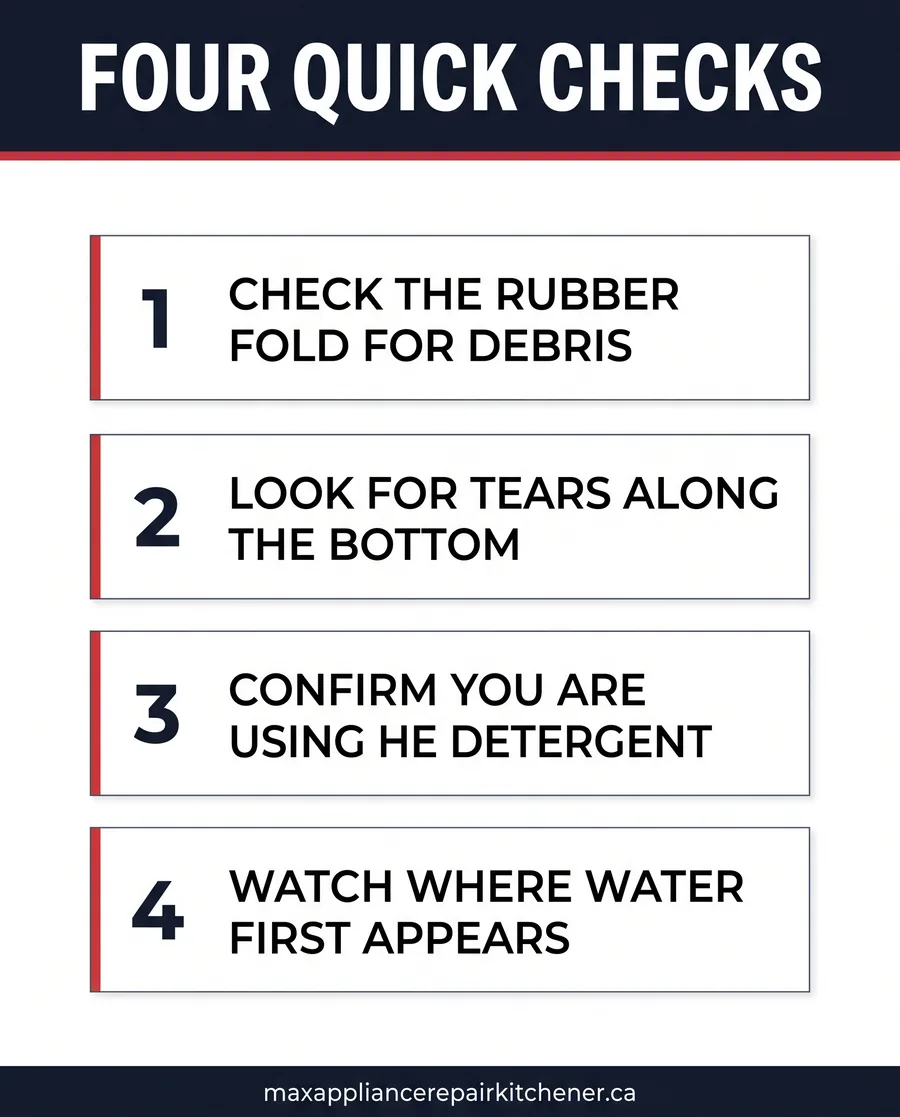
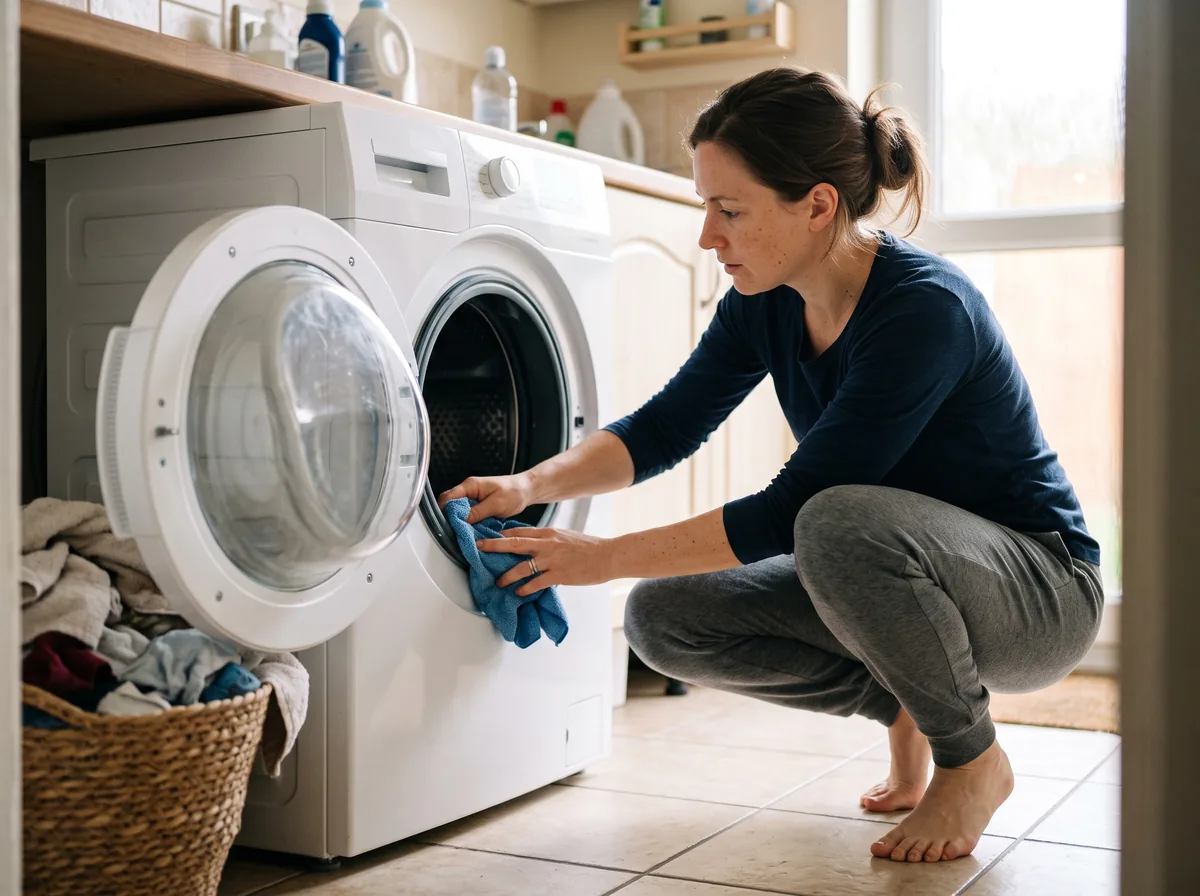
- Check the rubber fold: Run your fingers along the inside fold of the door gasket to feel for trapped items like coins or lint.
- Inspect the gasket: Wipe the rubber seal dry and inspect it thoroughly for tears, cracks, or worn areas.
- Verify your detergent: Ensure you are using High-Efficiency (HE) detergent. Non-HE detergent creates excess suds that force water past the seal.
- Test a small load: Run a quick cycle with a light load to observe exactly where water escapes.
| What You’re Seeing | Likely Cause | Recommended Action |
|---|---|---|
| Debris trapped in the rubber fold | Obstruction preventing full door seal contact | Quick fix: remove debris and wipe clean |
| Suds pushing past the seal | Non-HE detergent or overdosing | Quick fix: switch to HE detergent and use less |
| Torn, cracked, or deformed rubber seal | Physical damage or seal wear | Pro fix: door seal needs replacement |
| Water pooling underneath, door area dry | Internal hose, pump, or drain failure | Pro fix: internal component inspection required |
| Door will not latch securely | Faulty door latch or switch assembly | Pro fix: latch or switch replacement |
Quick Fix or Professional Repair?
If cleaning out trapped debris or adjusting your detergent stops the leak, your issue is resolved. However, if the rubber boot seal is torn, cracked, or deformed, a full part replacement is necessary. If needed, scheduling professional washer repair services ensures exact part matching and proper gasket tensioning to eliminate leaks permanently.
Safety Warning
If water is pooling near electrical outlets or the washer’s plug, stay out of the water and do not touch the washer or its cord. Stop using the machine. Cut power at the breaker panel only if you can reach it from a dry spot; otherwise call a licensed electrician.
What a Professional Door Seal Repair Involves
When the door boot gasket is damaged, replacing it requires partial disassembly of the front housing. A technician removes the retaining spring ring, detaches the old gasket, thoroughly cleans the seating channel, and fits a brand-new seal OEM-matched to your model.
Keeping the Leak From Coming Back
Extend the life of your washer door seal with these simple maintenance habits:
- Use proper HE detergent amounts: Avoid overdosing, which causes soap buildup and degrades rubber seals over time.
- Keep the door cracked between cycles: Allowing airflow prevents moisture buildup, mold, and odor.
- Perform monthly checks: Wipe around the rubber fold regularly to clear lint and small objects before they damage the seal.
If a quick check and a detergent switch do not solve the leak, addressing the problem early prevents minor leaks from escalating into severe water damage.
Disclaimer
This article offers general informational guidance for troubleshooting washing machine leaks. If you notice standing water near electrical connections, stop using the washer, stay out of the water and call a licensed electrician.
Download the Free Quick Guide
Get a printable checklist covering gasket maintenance, detergent selection, and troubleshooting steps.
Frequently Asked Questions
Why is my front load washer leaking from the door?
Most door leaks are caused by debris trapped in the rubber seal fold, a cracked or worn gasket, or excess suds from non-HE detergent. Cleaning the fold and checking detergent usage solves the majority of issues without requiring a service call.
Can I fix a leaking washer door myself?
Yes, if the issue is caused by trapped debris or detergent choice. However, if the rubber boot seal is torn or cracked, it will need to be replaced with a part specific to your washer brand and model.
Is it safe to keep using a washer that leaks from the door?
Stop using the washer until the leak is fixed, because even a small leak can reach the floor and electrical parts. If water reaches an outlet, the cord or the floor around the machine, do not step in it or touch the washer or its plug. Cut power at the breaker panel only if you can reach it from a dry spot; otherwise call a licensed electrician.
What happens if a leaking washer door goes unfixed?
Unaddressed leaks worsen over time as small gasket tears expand. Continual water exposure leads to damaged subflooring, warped baseboards, and potential mold growth in laundry areas.
Checking the rubber fold for trapped items and switching to an HE detergent resolves most issues with a front load washer leaking from the door. If your gasket is damaged and requires replacement, book an appliance repair service in Kitchener to have a technician fix the leak for you.