
Last updated: 11 August 2026 by the technicians at Max Appliance Repair Kitchener.
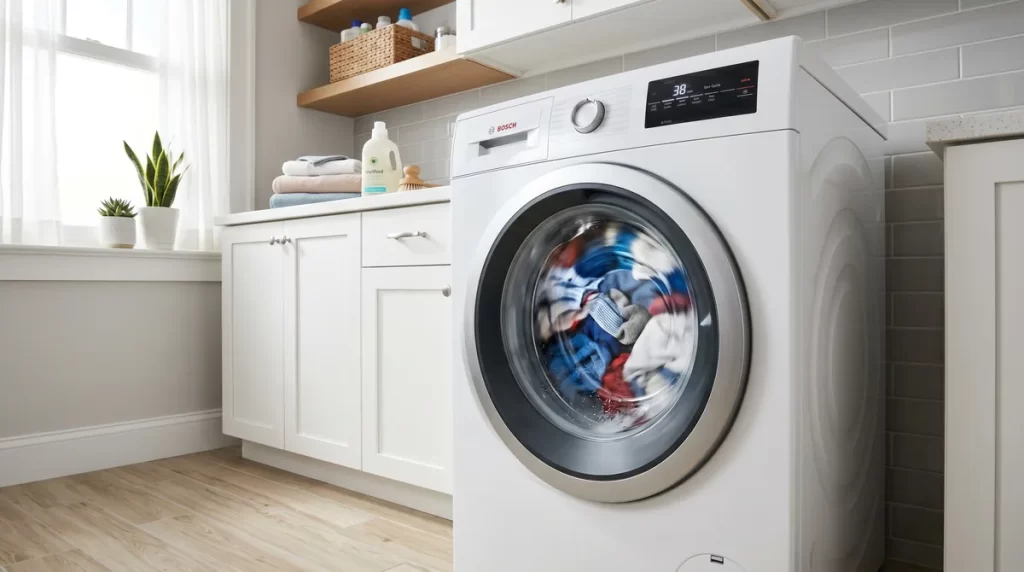
A washing machine shaking violently during the spin cycle is impossible to ignore, it shakes the floor, makes a racket, and can walk across the laundry room if nothing stops it. The causes range from a simple load imbalance you can fix in 30 seconds to worn mechanical components that need professional attention. This guide covers the 6 most common causes, starting with the free checks that resolve the majority of cases before getting into component failures.
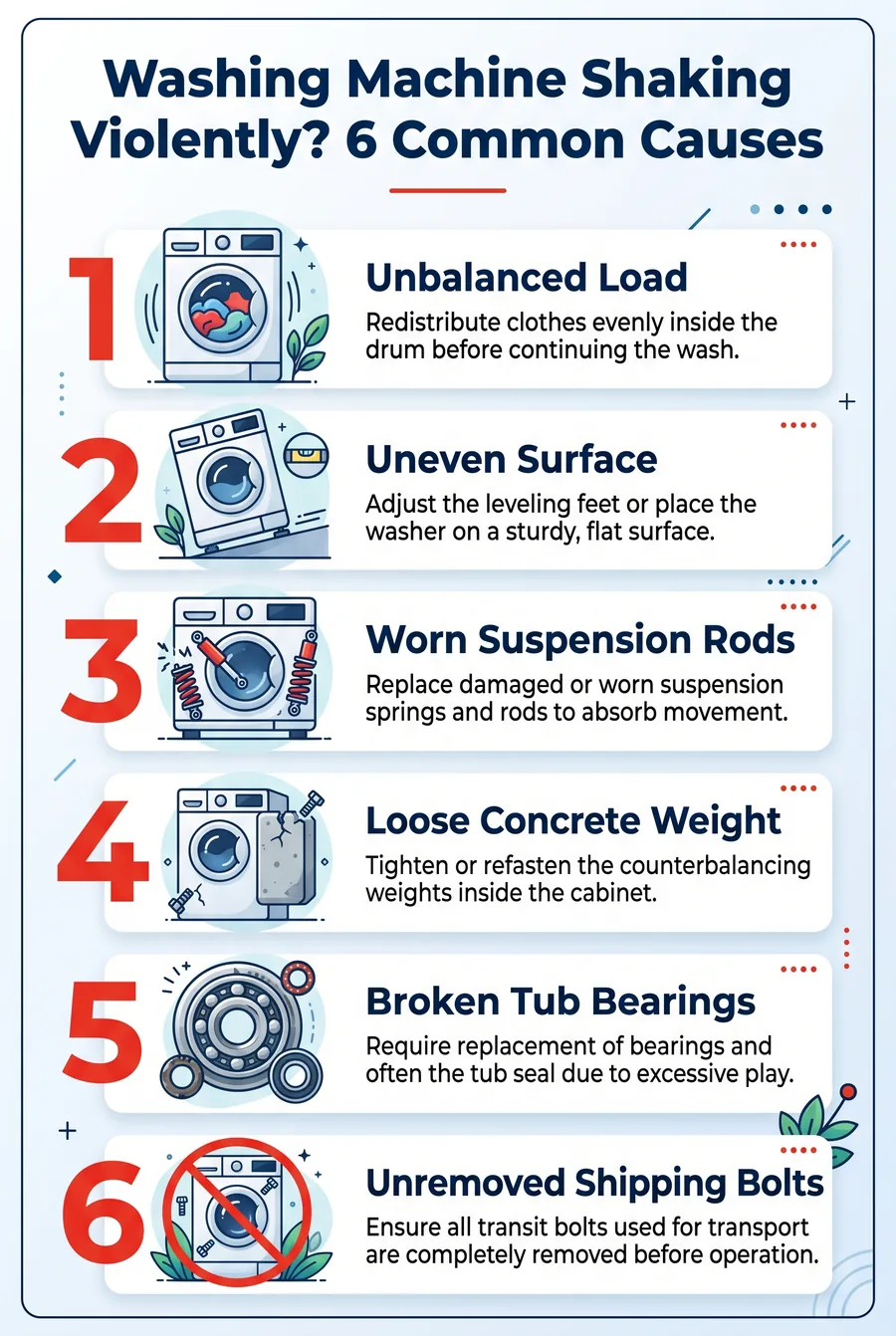
1. Uneven or unbalanced load
This is far and away the most common cause of violent washing machine vibration and the only one that is not a machine fault at all. When heavy items like jeans, towels, or bedding cluster to one side of the drum during the spin cycle, the drum becomes off-balance. The machine has to spin an unbalanced mass at high speed, and the result is severe vibration.
How to fix it: Stop the machine and redistribute the load evenly around the drum. For bulky single items like a comforter, add a few towels to balance the weight. Front-loaders are particularly sensitive to unbalanced loads because the drum axis is horizontal. Top-loaders with agitators are somewhat more tolerant but still affected.
Prevent it: Wash heavy items like jeans and towels with other similar items, not alone. Never wash a single heavy item without a balancing item of similar weight. Check that sheets and duvet covers are not balled up around the agitator or drum at the start of the spin cycle.
2. Machine not level or anti-vibration pads needed
A washing machine that is not sitting level will vibrate more than necessary during any spin cycle — even a well-balanced load will cause movement on an unlevel machine. Over time, levelling feet can work loose or the machine can shift on a smooth floor surface.
Check: Place a spirit level on top of the machine (front-to-back and side-to-side). All four feet should be firmly in contact with the floor. Adjust the levelling feet — they thread in and out to raise or lower each corner. Lock the feet with the jam nut once level is achieved.
Anti-vibration pads: On smooth tile or hardwood floors, even a perfectly levelled machine can slide during heavy spin cycles. Anti-vibration pads ($15 to $30 per set at any appliance store) sit under each foot and dramatically reduce both movement and transmitted noise. This is a simple and inexpensive upgrade for any machine that vibrates on a hard floor surface.
3. Shipping bolts not removed (new machines)
If a washing machine has started shaking violently immediately after installation, the most likely cause is the shipping bolts. All front-load washing machines come with transport bolts installed through the rear panel to lock the drum in place during shipping. If they are not removed before first use, the drum cannot move freely and the machine will vibrate severely on every spin cycle.
Shipping bolts are usually 3 to 4 large bolts on the rear of the machine, often with a plastic spacer. They are always documented in the installation guide, usually with a reminder sticker on the back of the machine. Remove them and store them in case the machine ever needs to be moved again.
4. Worn or failed shock absorbers
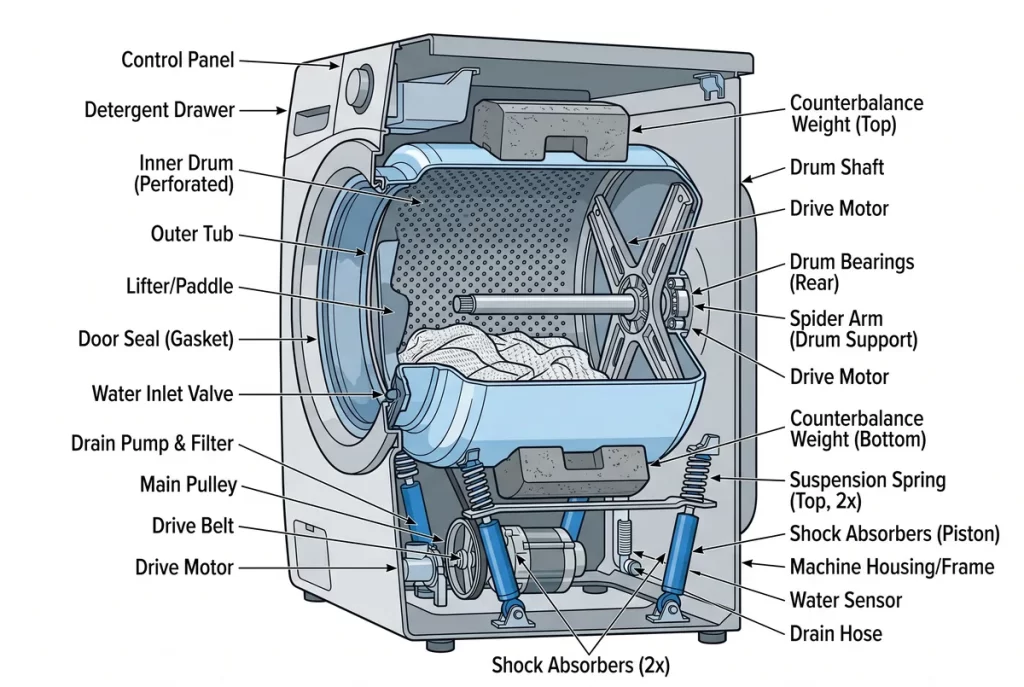
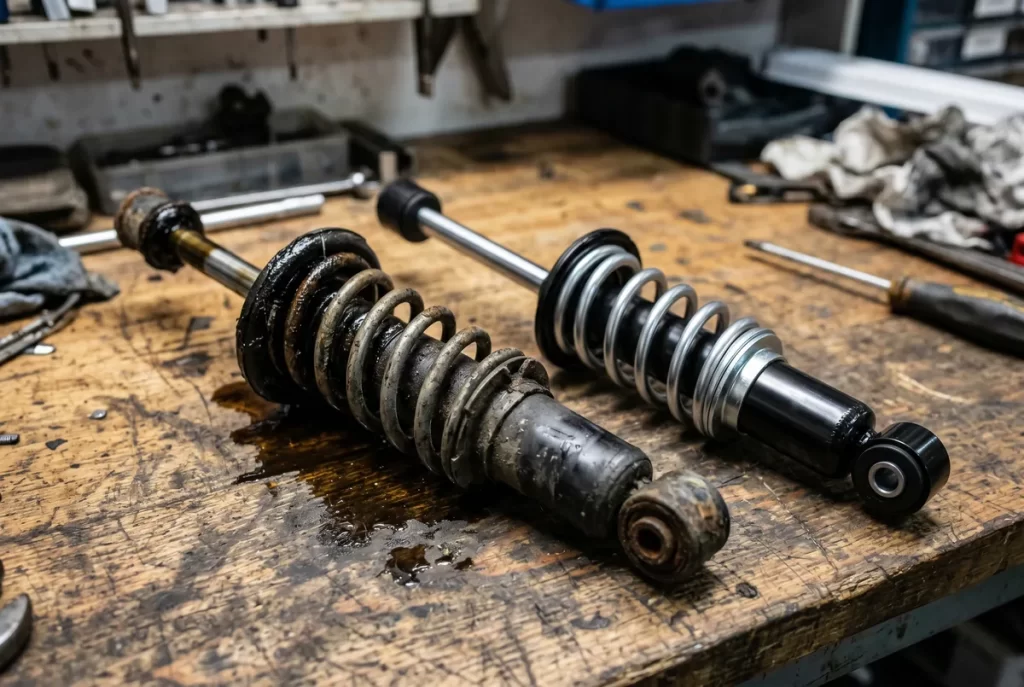
Shock absorbers (also called dampers or struts) are the suspension components that cushion the drum’s movement during the spin cycle. Front-loaders typically have two or four shock absorbers; top-loaders use a combination of springs and dampers. When they wear out, the drum moves with much less control, producing violent vibration during high-speed spin.
Signs of failed shocks: Vibration that has gradually gotten worse over several months, banging sounds during spin, or the drum visibly hitting the cabinet interior. The machine may also display an error code related to an out-of-balance condition.
Repair: Shock absorber replacement requires partial disassembly of the machine (removing the front panel or rear panel depending on the model). Absorbers typically run $20 to $60 for a set of two. On most brands, this is a professional repair — the disassembly involved and the need to confirm the correct part specification makes a service call worthwhile.
5. Failed drum bearings
The drum bearings support the drum’s rotation. When they wear out, the drum develops play in its axis — it does not spin on a perfectly fixed point. The result is vibration that gets progressively worse as speeds increase, often accompanied by a loud rumbling, grinding, or roaring noise during the spin cycle.
Bearing failure is one of the more serious washing machine faults. On many front-loaders, the drum bearings are press-fit into the rear tub half, and replacing them requires splitting the outer tub — a significant labour job. For some models, the bearing and rear tub come as an assembly. Repair costs typically run $200 to $400 all-in for a bearing replacement on a front-loader.
The repair decision: On machines under 7 years old, bearing replacement is almost always worth doing. On machines over 10 years old, compare the repair cost against a replacement appliance — drum bearing failure on a decade-old machine sometimes signals that other wear components are also close to end of life.
6. Loose counterbalance weights or spider arm
Washing machines use concrete or cast iron counterbalance weights (bolted to the outer tub) to reduce vibration by providing mass that dampens drum movement. When these weights crack or their mounting bolts loosen, the machine’s vibration damping system fails. You may hear a thudding or clunking sound in addition to vibration.
The spider arm (also called the drum shaft or drum spider) connects the drum to the rear shaft bearing. On front-loaders, spider arm fractures are a known failure mode, particularly on machines that have been heavily used. A cracked spider arm causes severe vibration and often a loud banging. This is a moderately complex repair requiring drum removal.
Counterbalance weight re-tightening is a DIY-accessible repair if access is possible. Spider arm replacement requires full drum removal and is a professional job.
Important note
Disclaimer: This article is for general guidance only. Costs, products, regulations, and best practices change. Max Appliance Repair Kitchener is not liable for outcomes from actions taken based on this content. Always confirm with a licensed appliance technician for your specific situation. Stop using a washing machine that is banging against cabinetry or moving across the floor — continued use can damage both the machine and the surrounding structure.
Frequently asked questions
Washing machine repair in Kitchener
If the vibration troubleshooting above points to a mechanical component failure, Max Appliance Repair provides washing machine repair in Kitchener with same-day and next-day appointments. Our technicians carry shock absorbers and common wear parts for most major brands on every service vehicle.
Download: Washing Machine Vibration Diagnosis Guide (PDF)
All 6 causes with step-by-step checks and repair cost estimates on one printable page.
Sources and references
- RepairClinic — Washer Vibrating or Shaking Repair Help and Diagnostics
- Consumer Reports — Washing Machine Reliability Ratings and Reviews
- Family Handyman — Washing Machine Vibrates Too Much: Causes and Fixes
Need a technician in Waterloo Region?
If it is still walking across the floor after this, the suspension is done. Book washer repair Kitchener. We also cover appliance repair Waterloo and appliance repair Guelph. Call (519) 783-0985, 7am to 10pm, seven days a week.