

Last updated: 11 August 2026 by the technicians at Max Appliance Repair Kitchener.
When your LG refrigerator section gets warm while the freezer stays rock-solid, it might feel like your fridge is dying, but it usually isn’t. An LG refrigerator not cooling while the freezer works is almost always an airflow or defrost problem, not a dead compressor, and knowing the difference decides whether this is a same-day fix or a bigger repair. If the fridge has already been warm for hours, our refrigerator repair in Kitchener team can talk you through it.
Here is what is actually going on inside the cabinet, a cause-by-cause diagnostic table, the safe checks you can run yourself in ten minutes, and the point where it stops being a DIY job. Food safety is on the clock, so let us get to it.
In this article
What an LG refrigerator not cooling really points to
On almost every modern fridge, including LG, one set of cooling coils, the evaporator, sits in the freezer. A small fan blows that cold air up through a vent and a flap called the damper into the fresh food section. The freezer makes the cold. The fridge just borrows it. That single design fact explains the whole symptom.
So when the freezer is cold but the fridge is warm, the cold is being made fine, it just is not reaching the upper compartment. Something is blocking, stopping, or misdirecting the airflow between the two. That points to a short list of usual suspects: a frozen-over evaporator coil, a stalled circulation fan, a stuck damper, or vents packed with food. A truly dead fridge, where both compartments go warm, is a different and rarer failure.
Quick take
Freezer cold, fridge warm means the cold air is not moving up, not that the fridge has stopped cooling. The likeliest causes are a frost-blocked evaporator, a failed fan, or a stuck damper, all of which are airflow problems rather than a failed compressor.
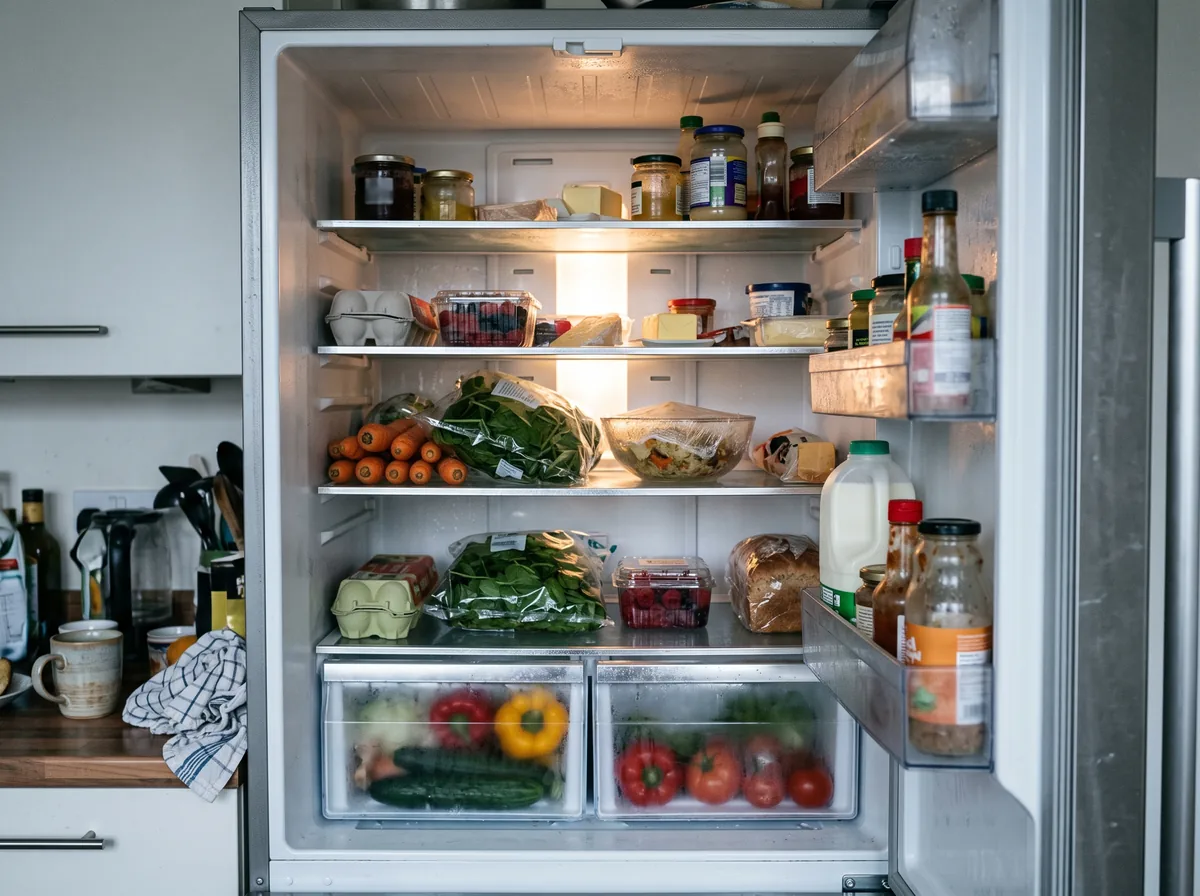
Common causes and fixes, from simple to serious
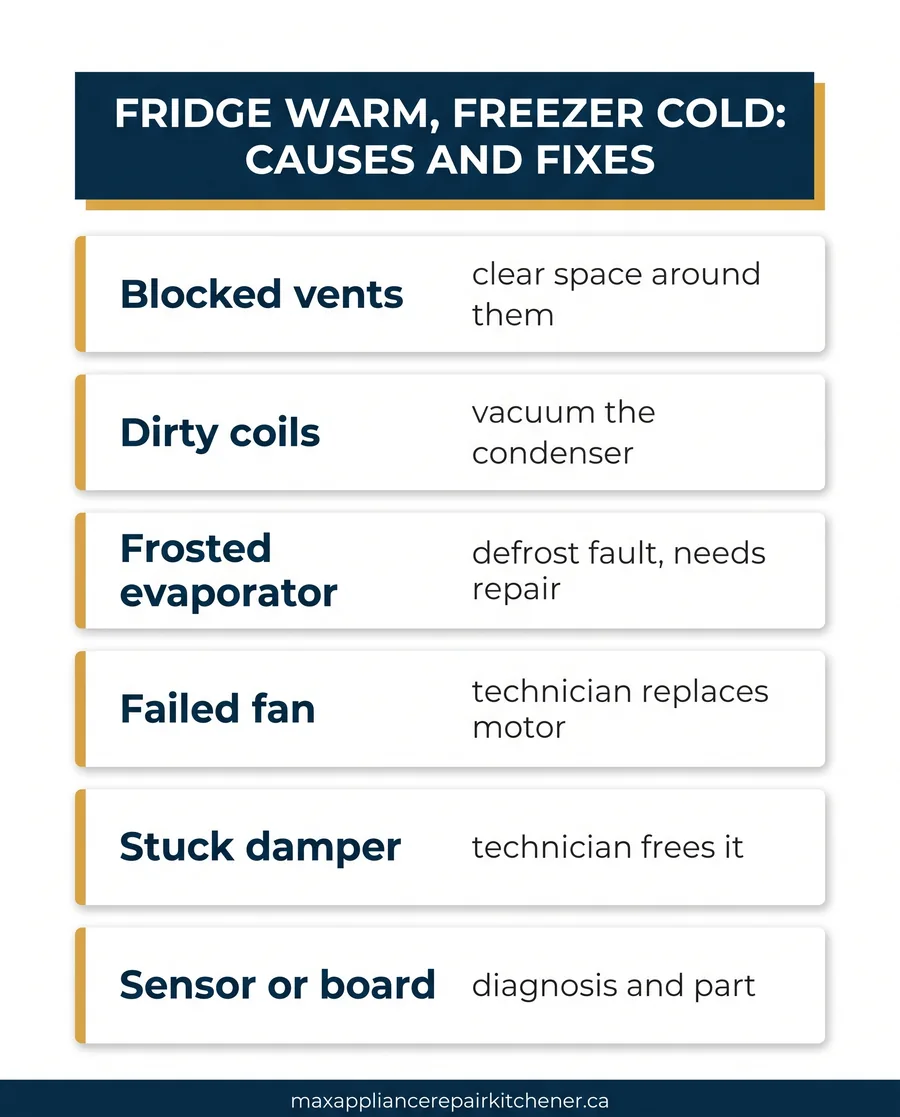
Work down this table roughly in order. The top rows are quick things you can check and sometimes fix yourself. The lower rows involve the sealed system or electronics and belong to a technician.
| Cause | What is happening | Typical fix |
|---|---|---|
| Blocked vents | Food packed against the fridge or freezer air vents stops cold air from circulating | Clear space around the vents and let air move |
| Dirty condenser coils | Dust-caked coils cannot shed heat, so overall cooling drops off | Vacuum the coils at the back or underneath |
| Frosted evaporator coil | A defrost fault lets ice build over the coil and choke the airflow | Manual defrost confirms it, then the defrost part is replaced |
| Failed evaporator fan | The fan that pushes cold air into the fridge has stalled or burned out | Technician tests and replaces the fan motor |
| Stuck air damper | The flap that meters cold air into the fridge is jammed shut | Technician frees or replaces the damper control |
| Control board or sensor | A faulty thermistor or main board misreads the temperature and stops cooling the fridge | Diagnosis and board or sensor replacement |
| Low refrigerant or sealed system | A leak in the sealed system slowly kills cooling capacity | Licensed sealed-system repair only, never a DIY job |
People often ask: why is only the fridge warm and not the freezer?
Because the freezer is where the cold is made and the fridge only receives it through a fan and a vent. If that delivery path frosts over, stalls, or jams, the freezer keeps freezing while the fridge slowly warms up. It is the most common refrigerator complaint we see, and it rarely means the whole unit has failed.
Safe checks you can run before calling anyone
- Check the settings. A bumped dial or a mode like holiday or demo can stop the fridge from cooling. Reset it to a normal fridge temperature.
- Feel for airflow. Hold your hand near the interior vents. If no cool air is moving, you have found the problem area.
- Unpack the vents. Move food away from the air vents in both compartments so cold air can circulate freely.
- Look for frost. Open the freezer and check the back panel. Heavy frost buildup points to a defrost fault.
- Do a manual defrost test. Empty the fridge, unplug it for 24 hours with the doors open, then restart. If it cools normally afterward and warms up again in a day or two, a defrost part is failing.
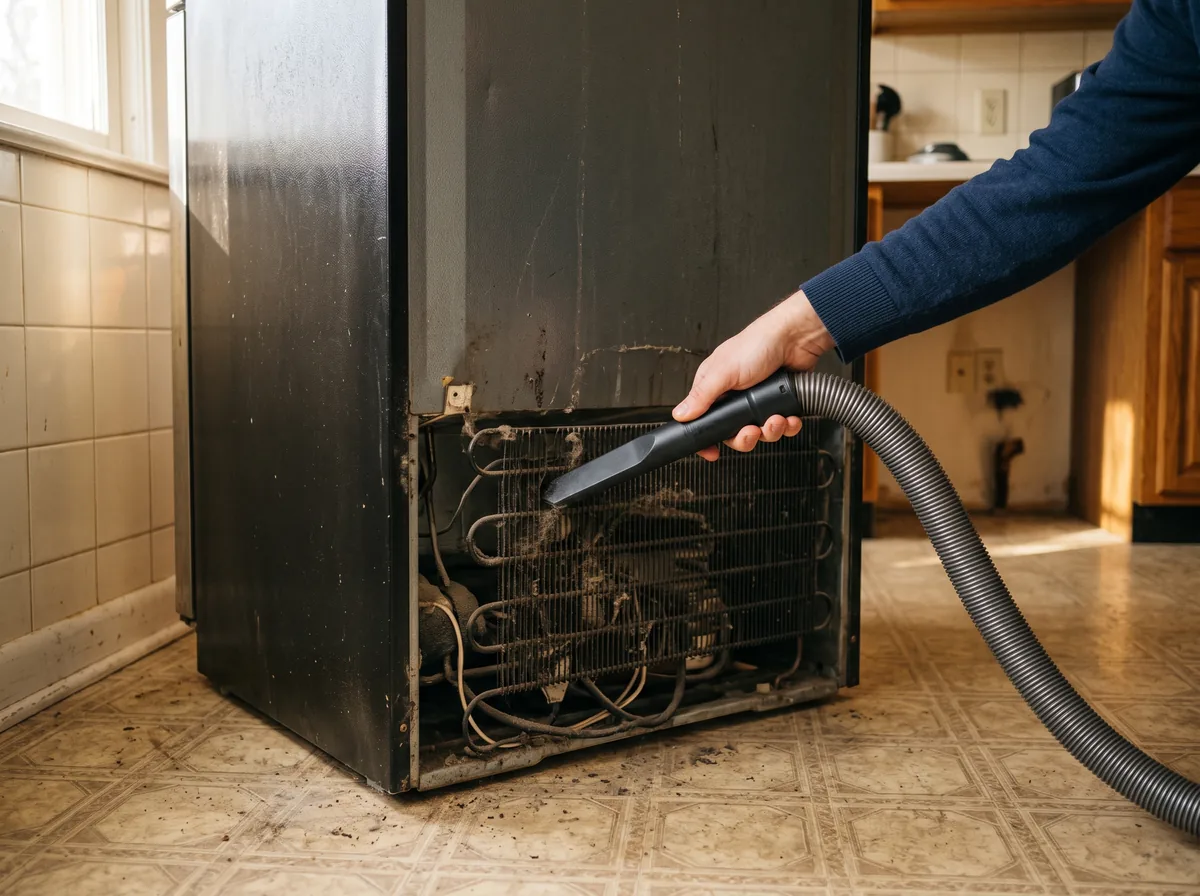
- Clean the condenser coils. Unplug, vacuum the coils at the back or beneath the fridge, and give it a few hours to recover.
- Check the door seals. A gasket that no longer grips lets warm air in and makes the fridge run warm. Confirm the doors close fully.
Pro tip
Set a fridge thermometer on the middle shelf before you call anyone. Health Canada’s guidance is to keep the fridge at 4 degrees C (40 F) or below. A real number tells a technician how far off you are and whether food in there is still safe, which speeds up the whole visit.
When an LG fridge needs a professional repair
If the vents are clear, the coils are clean, the settings are right, and the fridge still will not hold temperature, the fault is inside the system. A failed evaporator fan motor, a defrost heater or thermostat, a jammed damper, a bad temperature sensor, or a control board all need meters, parts, and know-how to diagnose safely. Anything involving refrigerant or the sealed system is licensed work by law and is never a DIY repair.
The clock matters here too. A fridge sitting above 4 degrees C for more than two hours puts food into the danger zone, so a warm fridge is worth acting on quickly, not living with for a week. If cooling performance is your real worry long term, choosing an efficient unit helps, and ENERGY STAR certified appliance guidance from Natural Resources Canada is a solid reference. For repairs on your current fridge, our LG appliance repair service in Kitchener and freezer repair service cover the sealed-system and electronic faults above.
Download the free quick guide
A one-page checklist to diagnose a warm fridge with a cold freezer before you call for service.
Frequently Asked Questions
A warm fridge with a cold freezer is one of the most fixable appliance faults there is, as long as you catch it before the food turns. If the simple checks do not bring the temperature back, Max Appliance Repair Kitchener diagnoses and repairs refrigerators for homes across Cambridge, Guelph, Waterloo, and Kitchener. Request a service call and we will pin down whether it is a quick airflow fix or a sealed-system repair, and give you the honest cost either way.
Need a technician in Waterloo Region?
LG sealed-system faults are not a DIY job. Book fridge repair Kitchener or see the LG error code table on our LG appliance repair page. We also cover appliance repair Guelph. Call (519) 783-0985, 7am to 10pm, seven days a week.
Check this before you book
- Health Canada gives 4C or colder for the fridge and -18C (0F) for the freezer. Confirm where yours actually sits with a thermometer in a glass of water read after 8 hours, before assuming the sealed system has failed.
- If the freezer is holding -18C but the fridge is warm, the fault is almost always the evaporator fan or the damper, not the compressor. That is a much cheaper repair, so it is worth checking first.